BACK

Sense Stone: A tactile AI companion for mindful breathing | January 2025

Interaction Design

Concept Project

User Research

Competitor Analysis

Ideation

Prototyping

Figma

Nim.video

Overview

Sense Stone is a concept project exploring how AI can support Gen Z wellbeing through touch, with minimal screen use. It centres on a small tactile device, calibrated via a conversational AI app, that adapts to the user's mood and environment. Once calibrated, it guides mindful breathing through subtle haptic feedback and gentle expansion, designed to support emotional regulation through research-backed breathing techniques. Inspired by the 'SENSESCAPING' trend (Trendwatching), and work by Modem (Terra) and Morrama (AI Mindful Tools), all of which highlight a shift towards responsive, low-screen wellbeing experiences.

UX PROBLEM

Gen Z users are interested in mindfulness but struggle to maintain consistent habits due to digital distractions and time pressure. This creates a gap between intention and action.

DESIGN STRATEGY

Design a responsive, screen-light breathing companion that makes mindful, emotion-regulating practice effortless and low-distraction.

FRAMEWORK

Based on ISO 9241-210, the project follows a human-centred design process: understand context → define requirements → design → test → iterate.

TARGET AUDIENCE

Gen Z (18–28) individuals interested in improving mental and physical wellbeing, including those managing anxiety, who value AI-supported guidance that feels trustworthy, simple, and non-intrusive

Sense Stone: A tactile AI companion for mindful breathing | January 2025

Interaction Design

Concept Project

User Research

Competitor Analysis

Ideation

Prototyping

Figma

Nim.video

Overview

Sense Stone is a concept project exploring how AI can support Gen Z wellbeing through touch, with minimal screen use. It centres on a small tactile device, calibrated via a conversational AI app, that adapts to the user's mood and environment. Once calibrated, it guides mindful breathing through subtle haptic feedback and gentle expansion, designed to support emotional regulation through research-backed breathing techniques.


Inspired by the 'SENSESCAPING' trend (Trendwatching), and work by Modem (Terra) and Morrama (AI Mindful Tools), all of which highlight a shift towards responsive, low-screen wellbeing experiences.

DESIGN STRATEGY

Design a responsive, screen-light breathing companion that makes mindful, emotion-regulating practice effortless and low-distraction.

UX PROBLEM

Gen Z users are interested in mindfulness but struggle to maintain consistent habits due to digital distractions and time pressure. This creates a gap between intention and action.

FRAMEWORK

Based on ISO 9241-210, the project follows a human-centred design process: understand context → define requirements → design → test → iterate.

TARGET AUDIENCE

Gen Z (18–28) individuals interested in improving mental and physical wellbeing, including those managing anxiety, who value AI-supported guidance that feels trustworthy, simple, and non-intrusive.

BACK

Sense Stone: A tactile companion for mindful breathing | January 2025

Interaction Design

Concept Project

User Research

Competitor Analysis

Ideation

Prototyping

Figma

Nim.video

Sense Stone is a concept project exploring how AI can support Gen Z wellbeing through touch, with minimal screen use. It centres on a small tactile device, calibrated via a conversational AI app, that adapts to the user's mood and environment. Once calibrated, it guides mindful breathing through subtle haptic feedback and gentle expansion, designed to support emotional regulation through research-backed breathing techniques.


Inspired by the 'SENSESCAPING' trend (Trendwatching), and work by Modem (Terra) and Morrama (AI Mindful Tools), all of which highlight a shift towards responsive, low-screen wellbeing experiences.

Overview

DESIGN STRATEGY

Design a responsive, screen-light breathing companion that makes mindful, emotion-regulating practice effortless and low-distraction.

UX PROBLEM

Gen Z users are interested in mindfulness but struggle to maintain consistent habits due to digital distractions and time pressure. This creates a gap between intention and action.

FRAMEWORK

Based on ISO 9241-210, the project follows a human-centred design process: understand context → define requirements → design → test → iterate.

TARGET AUDIENCE

Gen Z (18–28) individuals interested in improving mental and physical wellbeing, including those managing anxiety, who value AI-supported guidance that feels trustworthy, simple, and non-intrusive.

|
|
|

Phase 1: Context of Use

Phase 1: Context of Use

Research (secondary + primary) explored user behaviour, environments, and existing solutions to define needs, pain points, and the core UX problem.

  • 1 in 3 adults aged 18–24 in the UK, experience anxiety or depression — now the most affected age group.

Rising Anxiety Levels in Young Adults, UK

  • 1 in 3 adults aged 18–24 experience anxiety or depression — now the most affected age group.

  • 1 in 3 adults aged 18–24 experience anxiety or depression — now the most affected age group.

    -The Resolution Foundation, 2024

-The Resolution Foundation, 2024

-The Resolution Foundation, 2024

Rising Anxiety Levels in Young Adults

Survey User Insights (n=30)

Survey User Insights (n=30)

Survey User Insights (n=30)

Digital Dependence

88%

Use phones for recreational use >2hrs/day

Insight → Design for low cognitive load

Barriers to Mindfulness

39% Digital Distractions

30% Lack of Time

Insight → Deliver value in <60 seconds

The AI Opportunity

65% of Gen Z trust AI (but there are doubts over accuracy, trust, as well as the risk of being overly reliant on tech)

Insight→ Keep AI simple and transparent

(Example) Archetype: The Overwhelmed Student

(Example) Archetype: The Overwhelmed Student

Archetype: The Overwhelmed Student

The Daily Struggle:
  • Juggling university deadlines with social pressures.

  • The ‘Doom-Scroll’ Cycle: Uses phone for procrastination.

The Digital Trap:
  • Reliance on phones for everything...alarms, calendar etc. makes ‘digital detoxing’ hard.

  • Most attempts to ‘be mindful’ are broken by notifications.

The Tactile Gap:

  • A grounding tool that can be used discreetly ‘under the desk’ or in a library.

  • AI that proactively predicts stress moments.

Success Defined:

  • Shifting from ‘reactionary stress’ to ‘proactive focus’ in under 60 seconds.

  • Gaining a sense of agency over their mental state away from the screen.

The Tactile Gap:
  • A grounding tool that can be used discreetly ‘under the desk’ or in a library.

  • AI that proactively predicts stress moments.

Success Defined:
  • Shifting from ‘reactionary stress’ to ‘proactive focus’ in under 60 seconds.

  • Gaining a sense of agency over their mental state away from the screen.

The Tactile Gap:
  • A grounding tool that can be used discreetly ‘under the desk’ or in a library.

  • AI that proactively predicts stress moments.

Success Defined:
  • Shifting from ‘reactionary stress’ to ‘proactive focus’ in under 60 seconds.

  • Gaining a sense of agency over their mental state away from the screen.

Insight → Users struggle to regulate their emotions because distraction is always more accessible than control. Solutions must protect their attention and guide them towards what they actually need in that moment.

Competitor Analysis

No solution currently combines a physical device with real-time conversational AI to guide breathing- adapting to users' emotions and supporting regulation, especially for this overlooked age group.

Click here

Competitors

Sense Stone

Software (Indirect Competitors)

AI Integration?

Tactile-led Guidance?

Click here

Competitors

Sense Stone

Software (Indirect Competitors)

AI Integration?

Tactile-led Guidance?

Click here

Others

Sense Stone

AI?

AI?

Tactile-led?

Supporting Research

Supporting Research

Supporting Research

Regulated Breathing Benefits:

Research suggests regulated breathing reduces stress and improves physiological calm via parasympathetic activation.

Tactile Practices:

Hand-held objects (e.g., worry beads, stress balls) have been used for grounding, showing multi-sensory approaches support emotional regulation.

Smartphones & Mental Health:

Recreational screen time over 2 hours daily has been linked to declining mental health in young adults.

Regulated Breathing Benefits:

Research suggests regulated breathing reduces stress and improves physiological calm via parasympathetic activation.

Tactile Practices:

Hand-held objects (e.g., worry beads, stress balls) have been used for grounding, showing multi-sensory approaches support emotional regulation.

Smartphones & Mental Health:

Recreational screen time over 2 hours daily has been linked to declining mental health in young adults.

Phase 2: System Requirements

Phase 2: System Requirements

Research (secondary + primary) explored user behaviour, environments, and existing solutions to define needs, pain points, and the core UX problem.

Human-Centred AI
  • Real-time Adaptivity: AI processes mood, environment, time etc. to tailor breathing loops.

  • Scientific Foundation: Built on CBT & therapeutic breathing data.

  • Distraction-Free: Minimalist UI focused on recovery, not scrolling.

Ethics & Trust
  • Privacy First: Sensitive emotional data is encrypted and transparent.

  • Human-at-the-Wheel Approach: AI guides, but the user controls.

  • Bias Mitigation: Regular audits to ensure equitable care for all.

Inclusive Design
  • Haptic Language: Different vibrations for 'Confirm' vs. 'Warning.'

  • Adjustable Intensity: Haptic strength settings for sensory needs.

  • WCAG 2.2 Ready: Perceivable, Operable, and Understandable design.

Human-Centred AI
  • Real-time Adaptivity: AI processes mood, environment, time etc. to tailor breathing loops.

  • Scientific Foundation: Built on CBT & therapeutic breathing data.

  • Distraction-Free: Minimalist UI focused on recovery, not scrolling.

Ethics & Trust
  • Privacy First: Sensitive emotional data is encrypted and transparent.

  • Human-at-the-Wheel Approach: AI guides, but the user controls.

  • Bias Mitigation: Regular audits to ensure equitable care for all.

Inclusive Design
  • Haptic Language: Different vibrations for 'Confirm' vs. 'Warning.'

  • Adjustable Intensity: Haptic strength settings for sensory needs.

  • WCAG 2.2 Ready: Perceivable, Operable, and Understandable design.

Phase 2: System Requirements

Research (secondary + primary) explored user behaviour, environments, and existing solutions to define needs, pain points, and the core UX problem.

Phase 3: Design Solutions

Phase 3: Design Solutions

Research (secondary + primary) explored user behaviour, environments, and existing solutions to define needs, pain points, and the core UX problem.

Branding

#FFFFFF

#FFFFFF

#302D2E

#302D2E

#FFC76C

#FFC76C

#F3DCD6

#F3DCD6

#9DB88D

#9DB88D

#F5896D

#F5896D

Inter

regular/semibold

Inter

regular/semibold

Aa

Aa

Branding

#302D2E

#FFFFFF

#FFC76C

#F3DCD6

#9DB88D

#F5896D

Sense Stone: System Workflow

Step 1: User Input via App

I have a pitch in 10 minutes and feel anxious. Create a 5 minute breathing plan to calm me down

09:50

[NLP & ML Sentiment Analysis]

[NLP & ML Sentiment Analysis]

Step 2: The Personalised Plan via App

09:50

Feeling anxious before a pitch is common, but with focused breathing techniques, you can calm your nerves and perform your best.

Here’s a 5-minute plan, using proven methods to help specifically before presentations.

Performance Regulation

Performance
Regulation

[Sent to device via Bluetooth Low Energy]

[Sent to device via Bluetooth Low Energy]

Step 3: Screen-Free Regulation via Device
{mobile enters 'Focus Mode' automatically}


/ tactile device
/haptic cues
/expanding
/retracting

/ tactile
/haptic cues
/expanding
/retracting

[Adaptive Learning System]

[Adaptive Learning System]

{The AI continuously learns and improves from user feedback}
Step 4: The Feedback Loop via App
{The AI continuously learns and improves from user feedback}

How do you feel now?

App User Flow

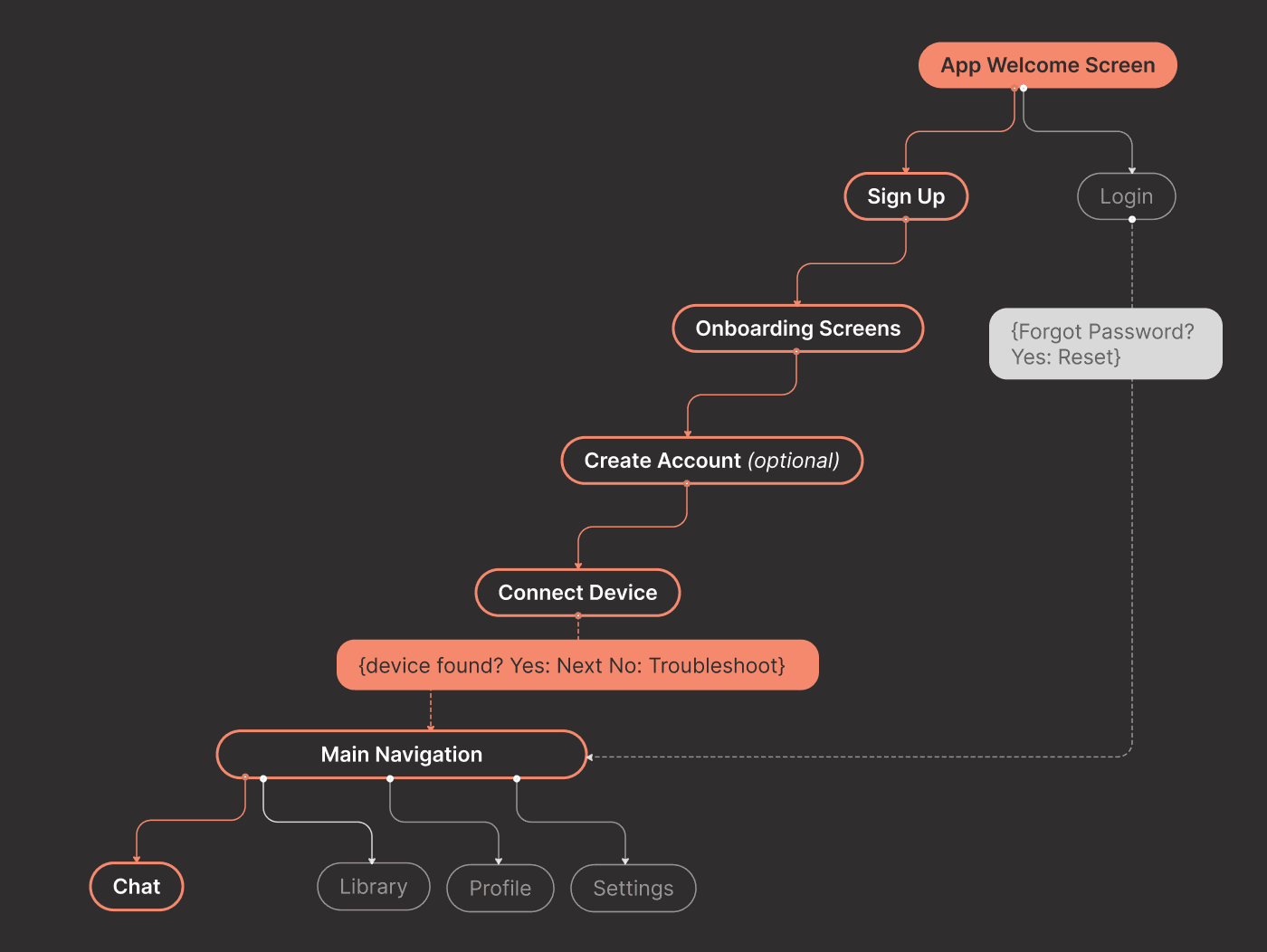
The app uses a minimalist, screen-light design with optional account creation and error-proof pairing to minimise friction. The MVP flow (in colour) prioritises core uses including device connectivity. Paths in grey map future iterations designed for long-term retention, including a Library for saving exercises, a Profile for mood logging, and Settings for adjusting haptic strength.
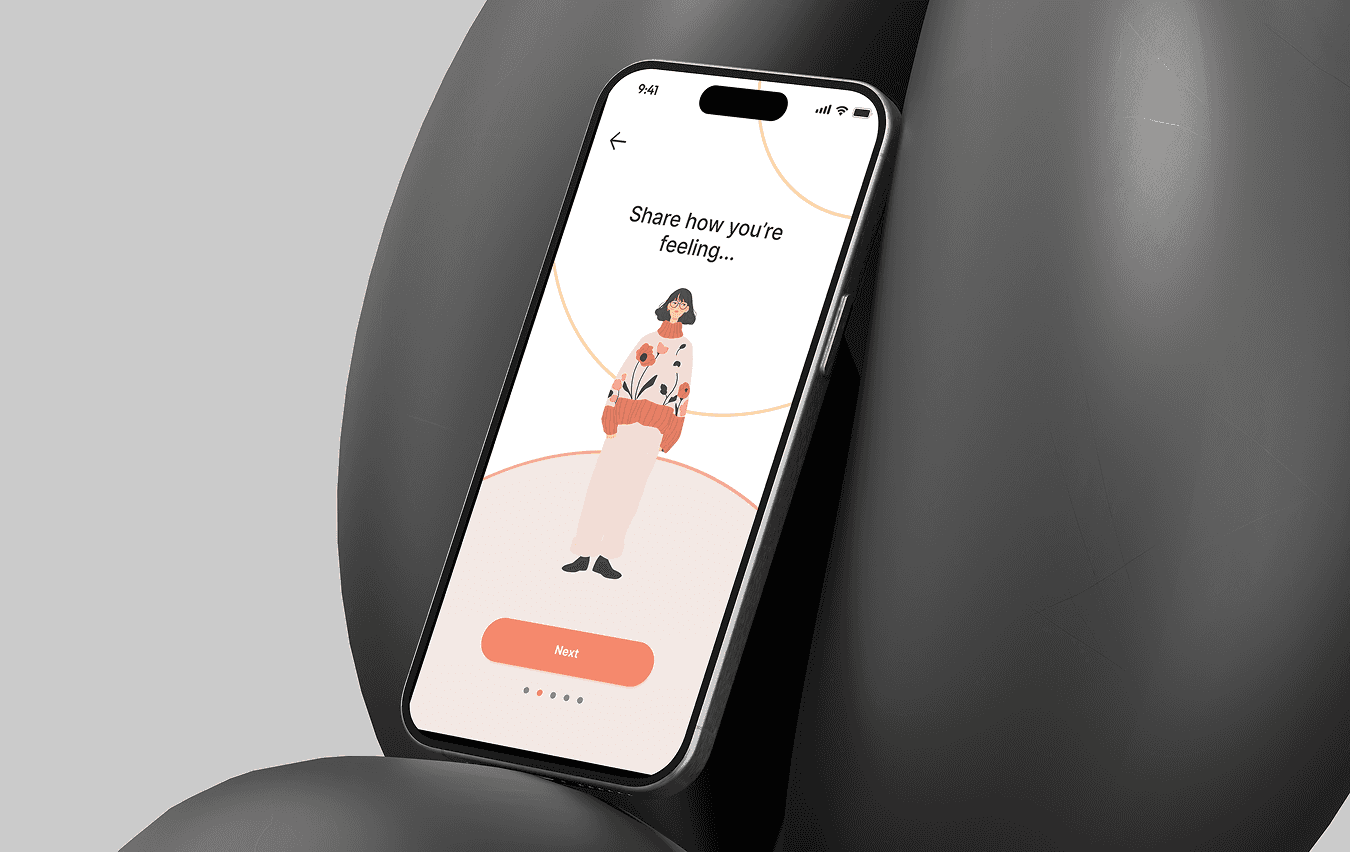
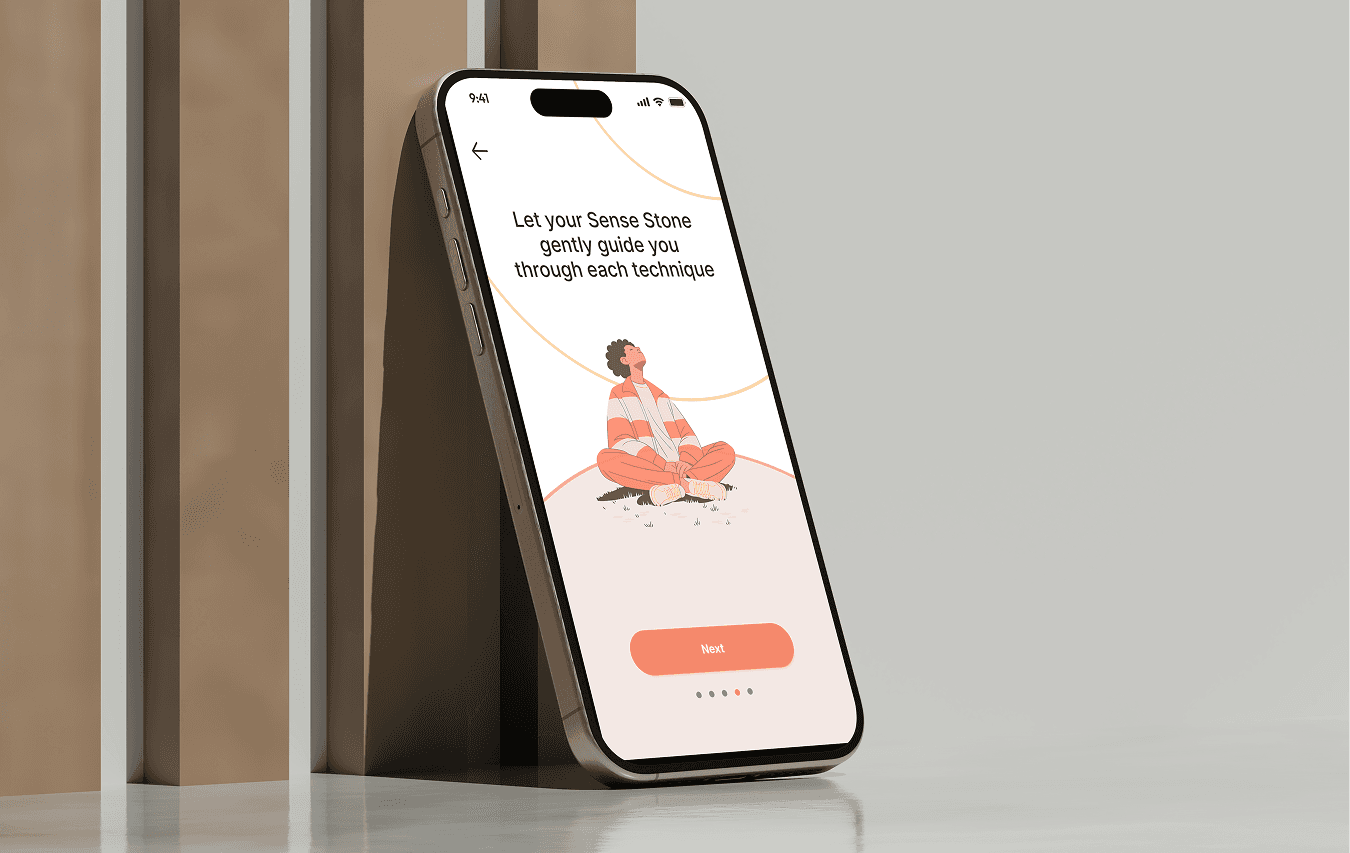
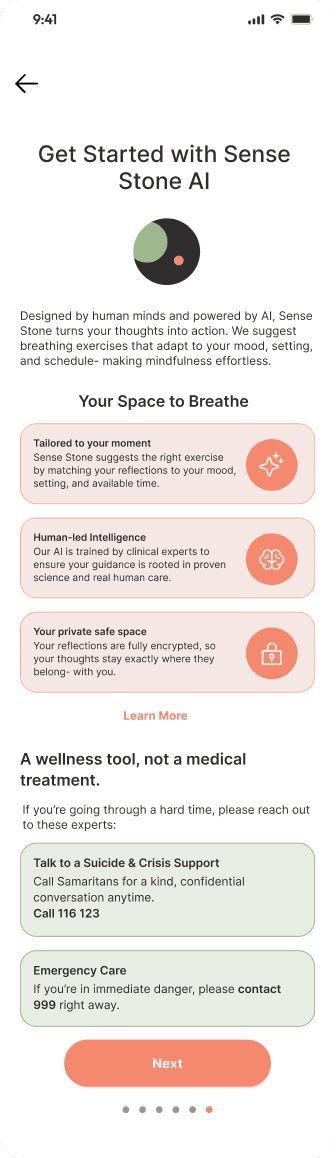
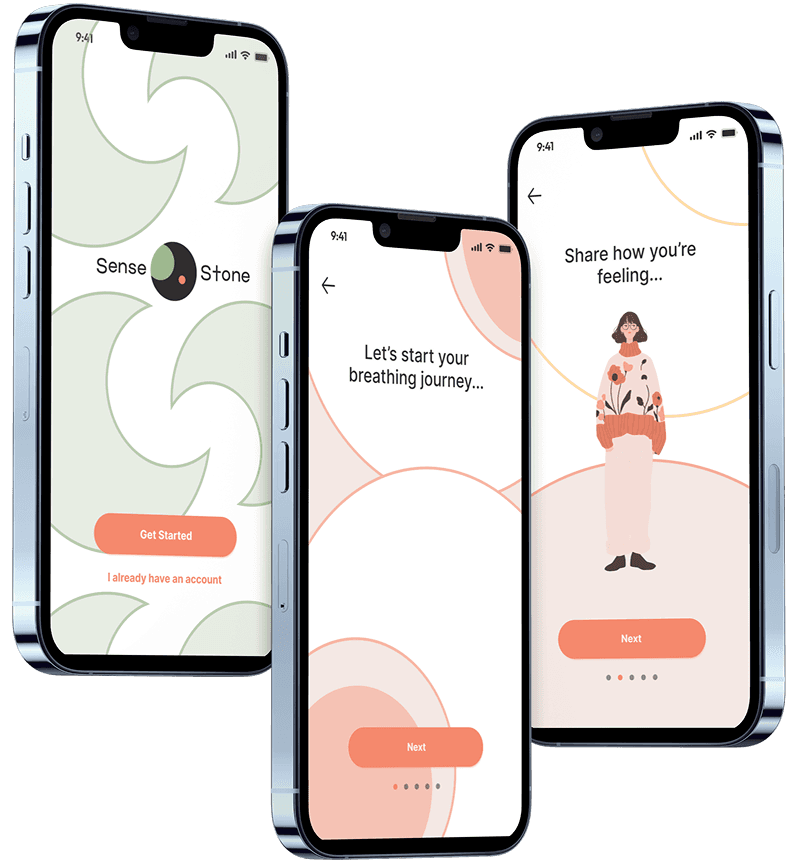
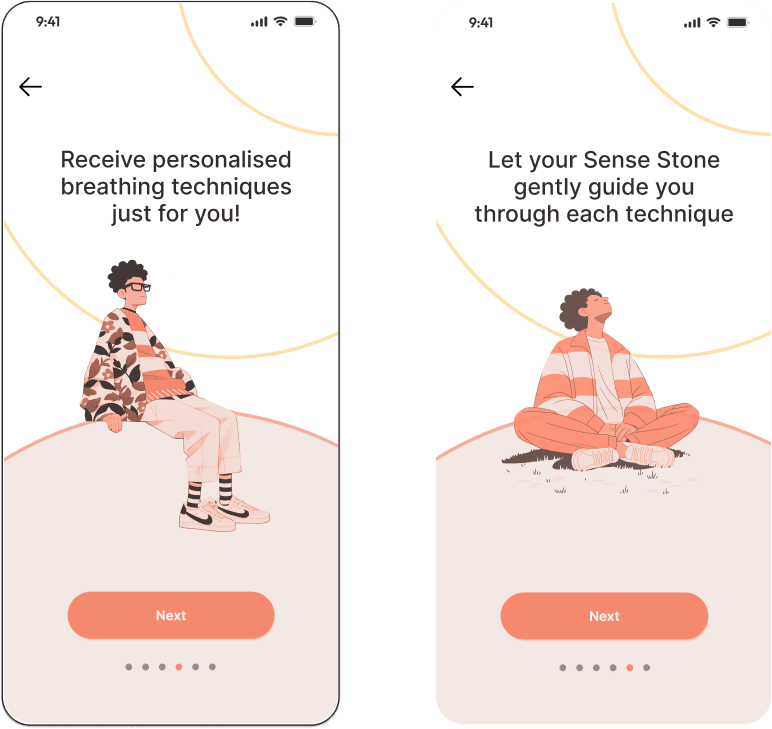
Onboarding

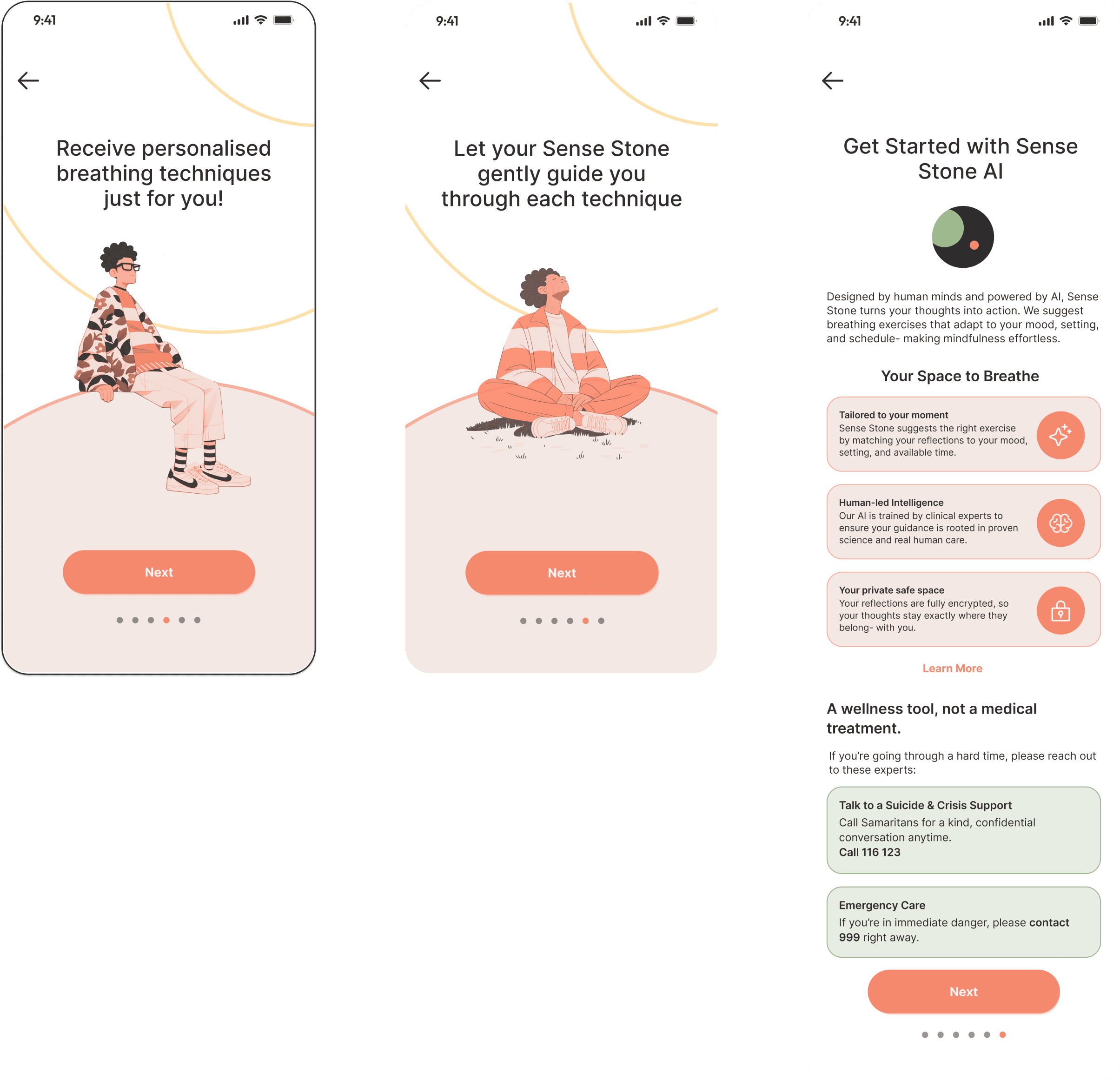
Onboarding lets users grasp how Sense Stone works, provides transparency on AI data use, and guides them to create an account.
Onboarding
/Welcome Screens
/Sense Stone AI
/Create Account (optional)

Onboarding
/Welcome Screens
/Sense Stone AI
/Create Account (optional)

Limitations
/Transparency
/External Support

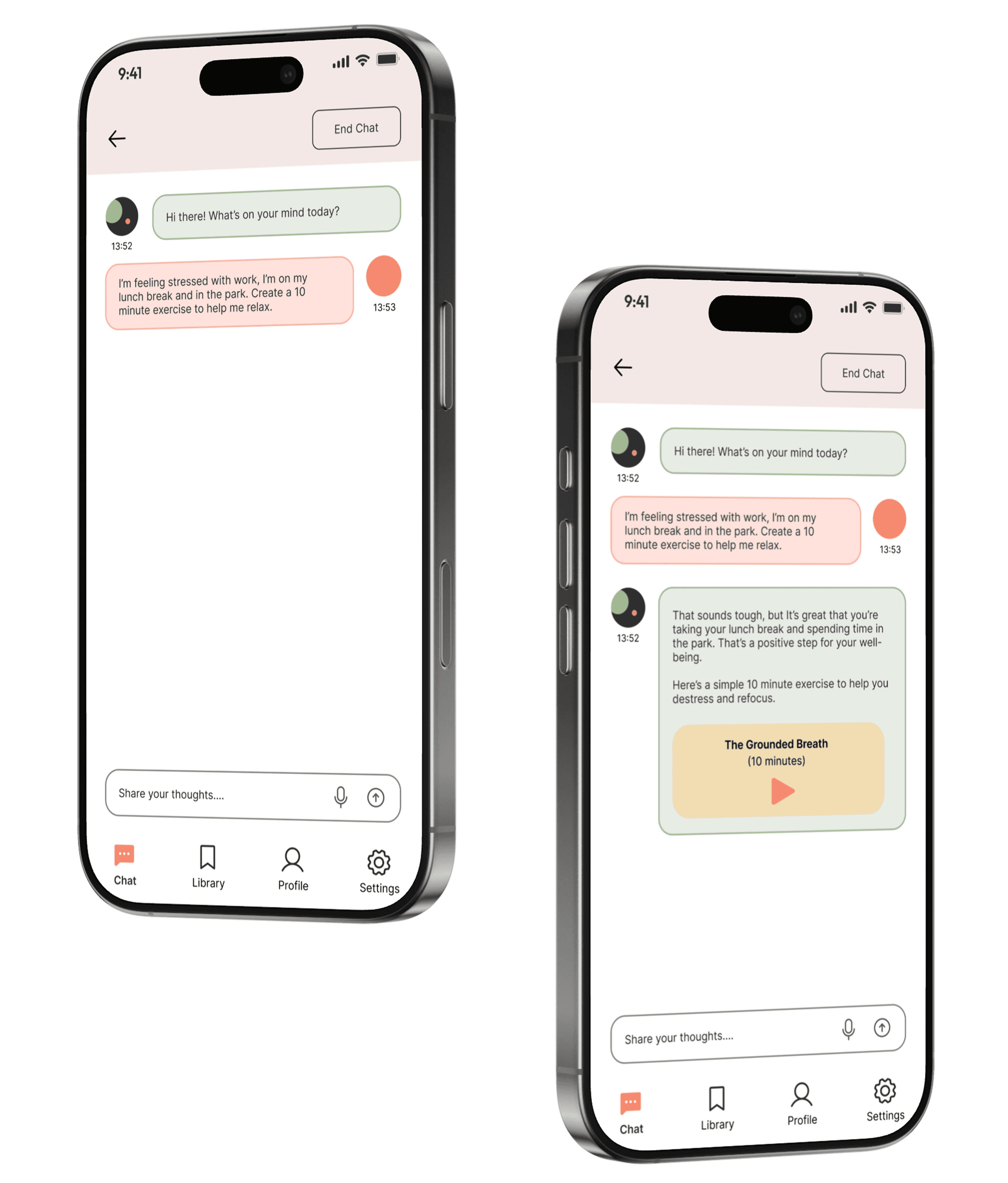
Conversational AI Chat

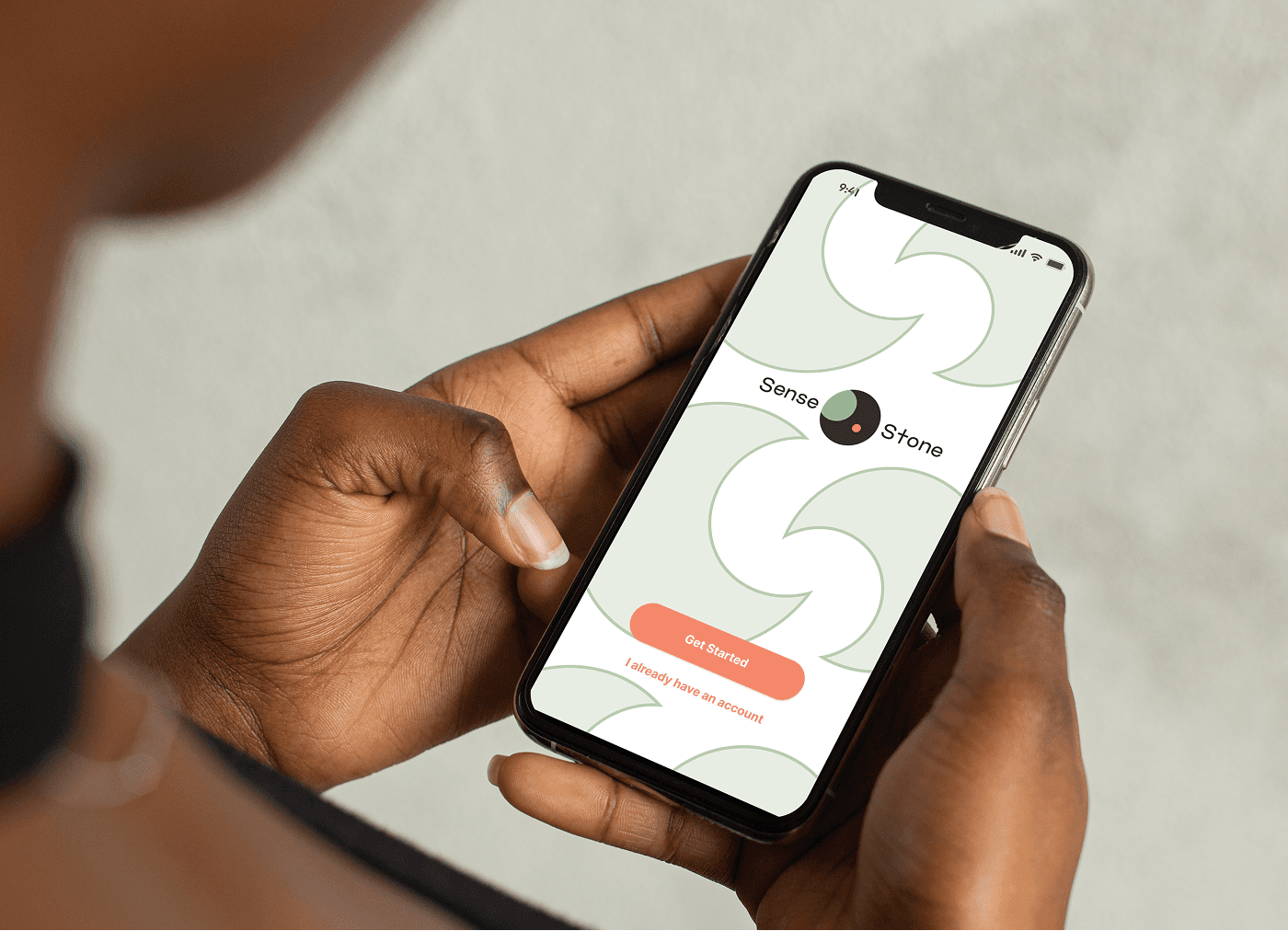
The chat interface is clean and intuitive, allowing users to share their feelings in natural language. The AI responds with personalised, situation-specific breathing suggestions.
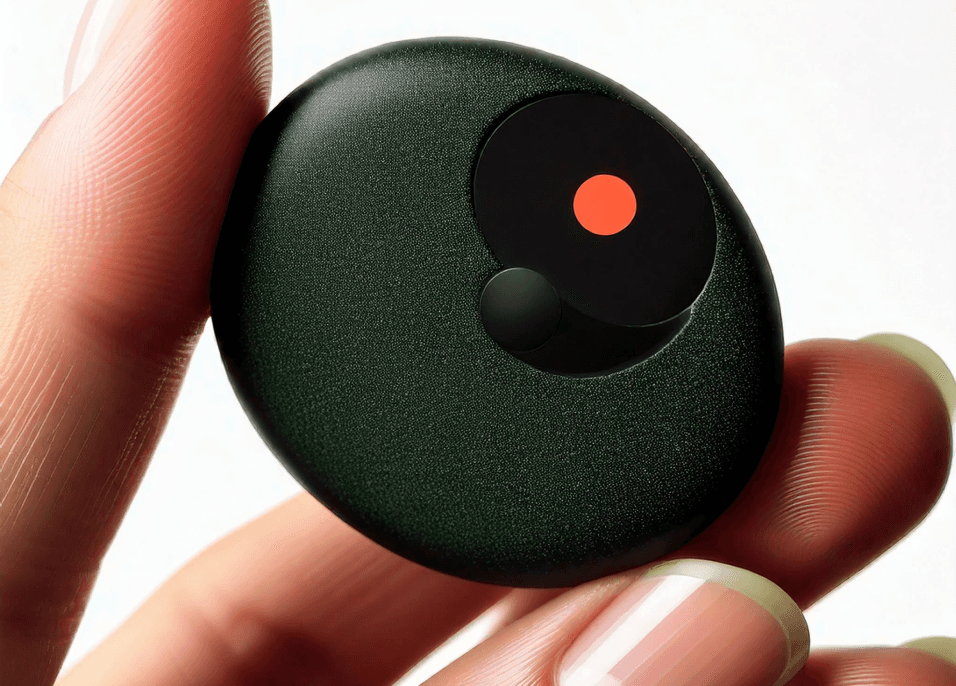
Device Visualisation

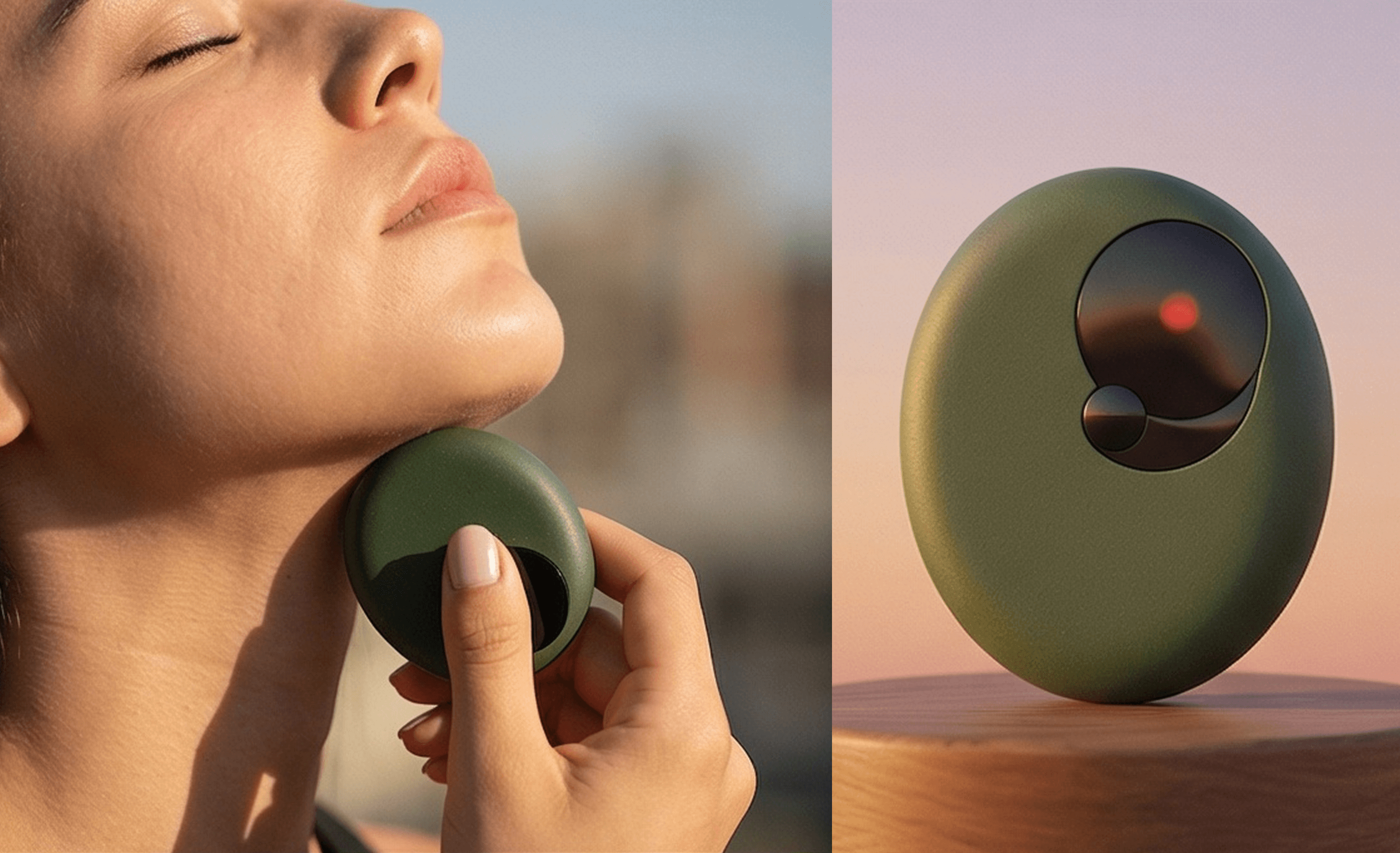
This AI concept render shows an early representation of the Sense Stone device highlighting its discreet form and overall design direction.
Material

/Textured

/Matte

/Recycled ABS


Adaptable

/Wearable

/Convertible

/Versatile


Function

/Lightweight

/Durable

/Discreet

Phase 4: Evaluation Methods

Phase 4: Evaluation Methods

Research (secondary + primary) explored user behaviour, environments, and existing solutions to define needs, pain points, and the core UX problem.

Early User Feedback

Five potential users were shown the device visualisation and an interactive app prototype, with interactions explained. Using a think-aloud approach, insights were recorded as users shared suggestions, ideas, and thoughts about the concept.
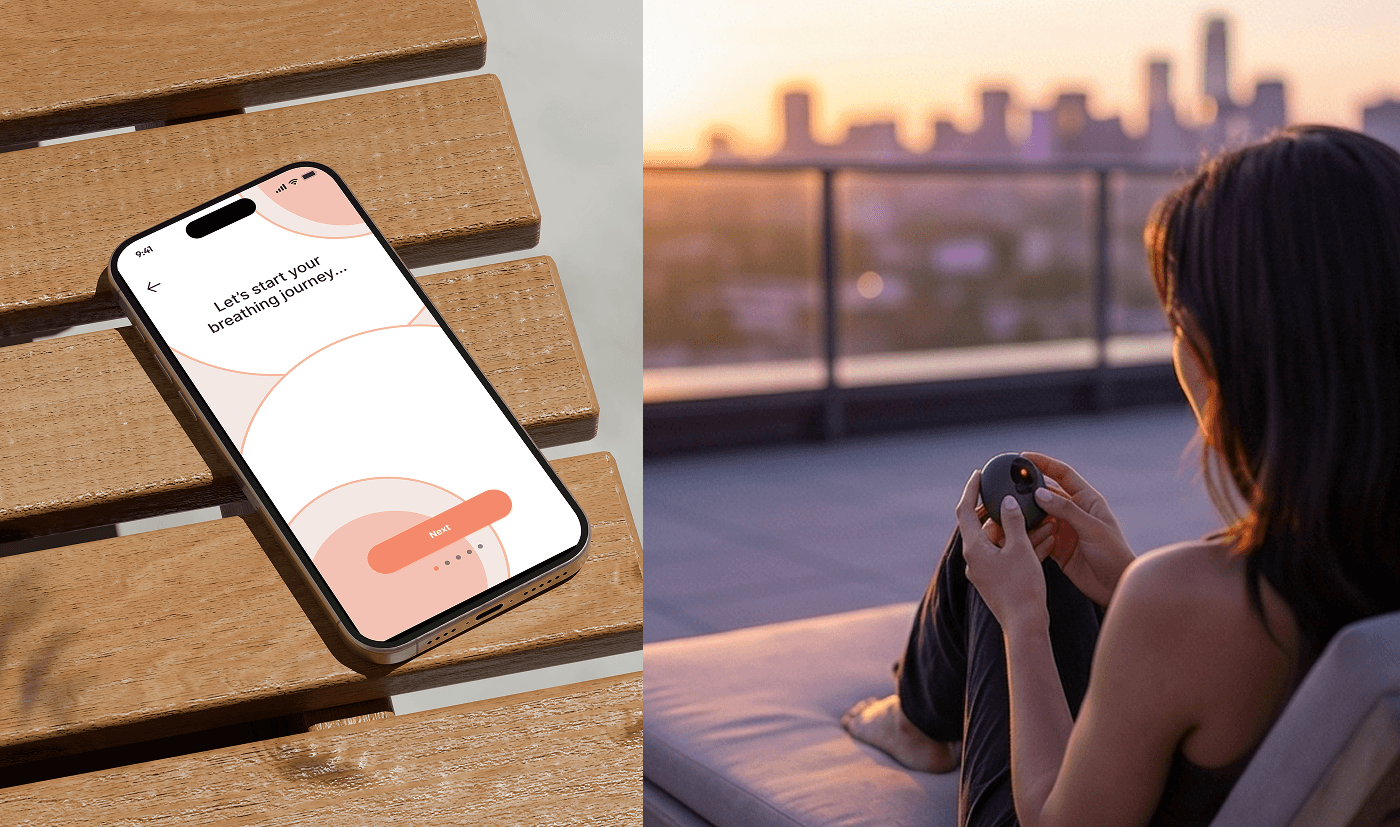
“I like that it gives me an exercise that fits how I’m feeling in the moment. That actually might make me feel better.”

“The branding feels calming, but I’d want to make sure the app has a dark mode.”

“I’m curious what the device feels like- I’d want to try it first before deciding if I’d use it.”

Copy component

Copied

florayner67@gmail.com

Designed & developed by Flo Rayner

All rights reserved © 2026

Copy component

Copied

florayner67@gmail.com

Designed & developed by Flo Rayner

All rights reserved © 2026

Copy component

Copied

florayner67@gmail.com

Designed & developed by Flo Rayner

All rights reserved © 2026